

Who is this Fischer-Tropsch anyway?
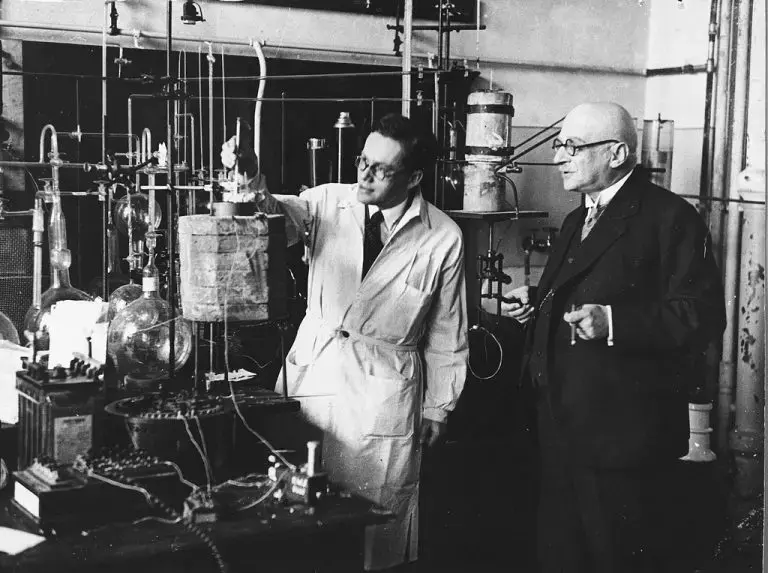
Fischer-Tropsch or FT has become the by-word of the new age of sustainability. “Who is she?” I hear you cry, and “how do you spell that?”. Well, it all started a long time ago in 1925 with two fellows from Germany, Franz Fischer, and Hans Tropsch. They found that by passing a pressurised mixture of carbon monoxide and hydrogen, called “syngas”, over a metal catalyst at about 250C, liquid paraffins were formed.
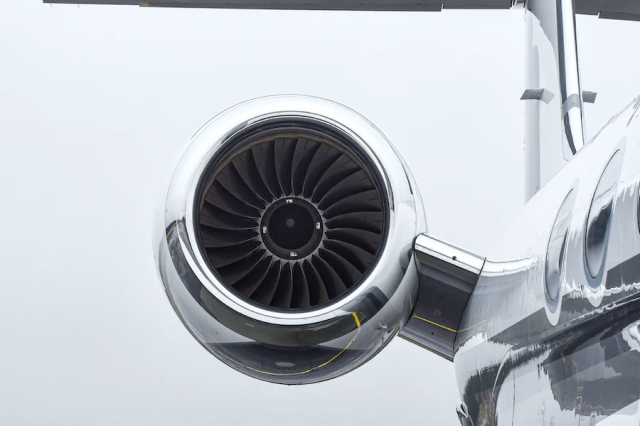
These compounds were like the ones found in our regular liquid fuels, petrol (often corrupted to “gasoline”), diesel (named after the German inventor of that rattlingly good engine) and Jet-1A (regular aviation fuel). This was largely unnoticed in the UK because we got all our supplies from the middle east, thank you very much.
But it rose to importance in the war years as a main source of fuel for the German war machine. It also enabled the South African economy to flourish during the years of the trade embargo. The carbon monoxide and hydrogen were made by “gasification”, heating coal with a supply of air and steam, in a very similar way to making towns gas. This is very old chemistry, often referred to now as “gas-to-liquids”, or even “GTL”.
Fischer-Tropsch is back in fashion
Well, guess what, “What goes around comes around” as they say, and we at Avioxx are as guilty as anyone in proclaiming FT to be the future. And that’s because you can make the “syngas” from almost anything containing carbon. “Rubbish!” I hear you heckle. Yes indeed.
The unique Avioxx method
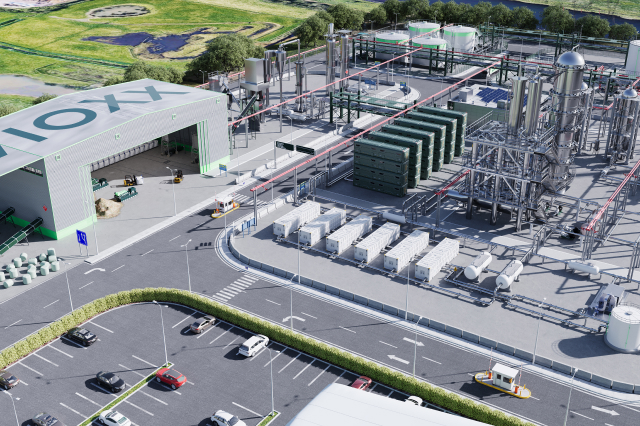
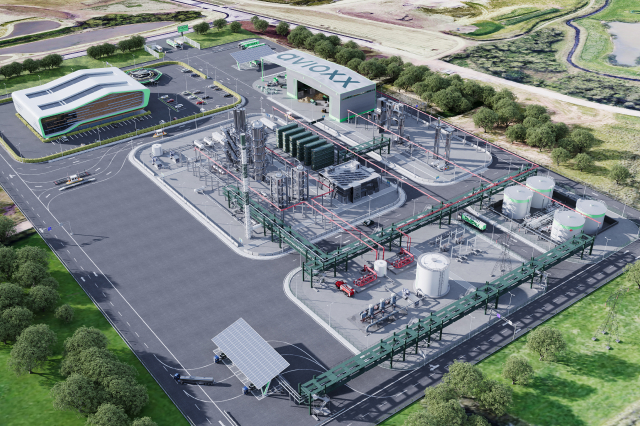
Our process converts domestic waste to aviation fuel using the same well-established processes that have been around for a long time. We have of course added a few major refinements. The first is that we use pure oxygen to gasify the waste. This promotes a rapid reaction with “difficult” materials such as moist food waste, it reduces the size of the plant needed because we have eliminated the inert nitrogen which dilutes the gases in air-fed systems. We’ve also eliminated any prospect of nitrogen oxide formation.
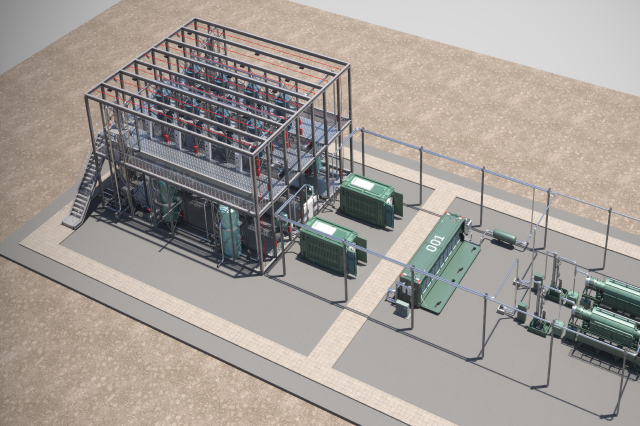
The second advance is the use of a fuel cell stack which uses the cleaned syngas to make electricity, and this in turn is used to run an electrolyser, which generates the oxygen used and hydrogen. The unconverted syngas is fed to the FT unit and the hydrogen is used to enhance the feed composition, operate other refining steps, and so on.
Stability and control are the key
The Avioxx process is designed to accommodate the very wide-ranging composition of the waste materials being processed. Un-recyclable or kerbside household residual waste contains on average about 30% of food waste which has a high moisture content and a low energy value, whilst a lot of the remainder is paper card and plastic, which is more energy rich. Our process has to manage an ever-changing profile of waste, and has built in flexibility and redundancy, together with a complex automatic control system. This is designed to ensure that the gases fed to the FT section are maintained at their optimal composition. Success in this area is the key to the future of FT.
Huge potential for “designer” fuels
There is enormous scope to improve the selectivity of the FT process and the refinement of the product mix, i.e. the mixture of components delivered in the final fuel. Whereas traditional fossil-derived fuels contain an enormous number of components, some in minor or trace quantities, the mixture in GTL is narrower. However, the mixture of components is still quite broad. This is because the polymerisation process is complex, and the temperature within the reactor varies both radially and axially. In the trade there is a well-known graph which describes the distribution of materials which are produced in the FT reaction and highlights the classification of the different fuels produced according to an “alpha” factor. This distribution is named after Anderson, Schulz and Flory. It’s a very complex field, but in operational terms, process stability and optimisation are an essential precursor to improving the selectivity of the products, and our process offers this.
Better fuels in performance and environmental impact
Our aim is to narrow down the range of components in the fuel mix to those most desirable in terms of the energy delivered, energy density and value per litre to the airlines. In addition, we seek the elimination or minimisation of those components guilty of environmental damage, such as contrail formation. For example, it is well known that heavier longer chain and aromatic compounds create more carbon deposits in engines, and it is these particulates which are the source of the white streaks in the sky.
We believe we can apply the high level of our engineering skills to the design and control of the FT reaction and its ancillary processes and achieve a real breakthrough. In the quest for cleaner fuels, in terms of alternatives to fossil-based ones, we will produce better fuels, both in economic and environmental terms.
At Avioxx, utilisation of the Fischer-Tropsch reactor at the back end of our process is critical. It allows us to produce higher quality custom fuels than more traditional distillation methods from fossil fuels. It’s well proven technology that makes it easier for us to produce compliant fuel in line with the licensing requirements. We have developed our own Fischer-Tropsch reactor design as part of our bench demonstration unit and look forward to enhancing our reactor design for the specific use to convert waste to jet fuel as we scale up the business.
To learn more about the Avioxx systems and processes then please get in touch at info@avioxx.com.