

Waste-to-Wings: Europe’s €100 Billion Circular Aviation Opportunity
By Chris Hancock
Europe’s aviation industry is entering a new phase where Sustainable Aviation Fuel (SAF) is no longer a question of whether it belongs, but how quickly the industry can produce enough of it to meet growing demand.
Regulation is driving this shift and, as SAF blending requirements increase over the coming decades, Europe is likely to face a significant gap between the amount of fuel required and the production capacity currently being developed.
Closing that gap will require more than new technology. It will also require infrastructure that can be deployed repeatedly and at scale.
One of Europe’s most overlooked resources could help provide it: residual waste. Millions of tonnes of commercial, industrial and municipal waste are produced across Europe every year. Much of this material has limited value within existing waste management systems, but it can provide a reliable, domestic feedstock for SAF production.
Using waste in this way also avoids competing with food production and can make use of existing waste collection and logistics networks.
Rethinking how we produce SAF
The opportunity is not simply to build more SAF plants, but to connect waste management and fuel production more closely, creating regional infrastructure that can turn a difficult waste stream into a valuable transport fuel for years to come.
Locating production alongside existing waste infrastructure can also reduce the distance feedstocks need to travel, while keeping more of the economic value within the regions where the waste is generated.
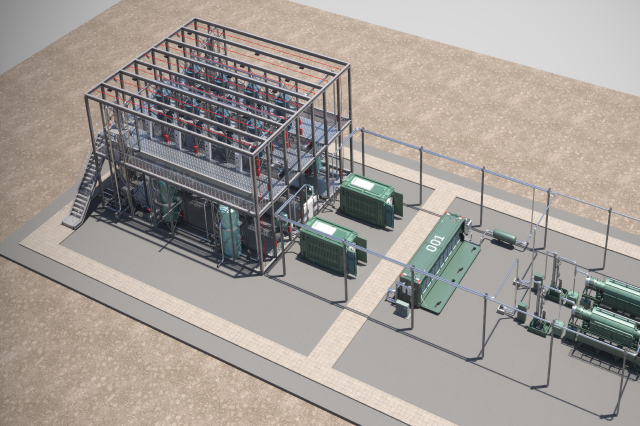
This approach depends on bringing together a number of established industrial technologies. Waste can be gasified and converted into syngas, which is cleaned and conditioned before being converted into hydrocarbons through Fischer-Tropsch synthesis. The resulting synthetic crude can then be hydroprocessed and separated into aviation fuel and other hydrocarbon products.
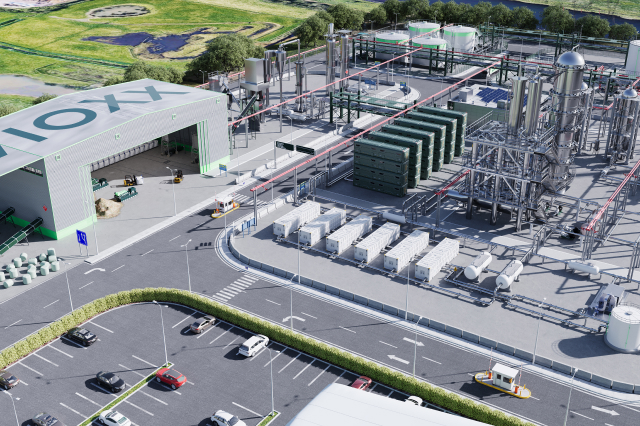
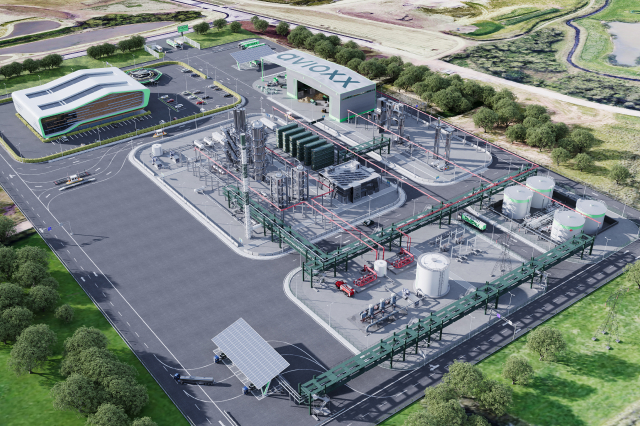
The individual technologies are established. The challenge lies in integrating them into an efficient system capable of operating reliably at commercial scale. This is the approach being developed by Avioxx through its integrated waste-to-SAF platform.
From technology to infrastructure
As the sector develops, the competitive advantage is increasingly moving from proving that a technology works to demonstrating that it can operate reliably at commercial scale.
That means real operating data, independently verified fuel testing and process models that reflect actual plant performance. It also means robust engineering, experienced delivery partners and a clear route towards project finance.
Avioxx has already progressed through pilot operation, fuel production, independent testing and engineering validation. Its development programme has produced synthetic crude from waste, hydroprocessed it into fuel fractions and achieved a 54% kerosene fraction from residual waste, alongside independent fuel analysis and engineering validation.
The next step is translating that technical evidence into larger-scale operating data and ultimately a bankable commercial plant.
Why scale matters
Scale can make a significant difference to the economics of waste-to-SAF. An initial 5,000-tonne-per-year facility can provide an important first-of-a-kind reference point, demonstrating the technology and creating the operational data needed for larger projects. At commercial scale, a 32,000-tonne-per-year facility can then provide a model that can be replicated across multiple locations.
Illustrative economics for the Avioxx platform indicate approximately €20 million in annual revenue and €6 million in EBITDA for a 5,000-tonne-per-year facility. At 32,000 tonnes per year, these figures increase to approximately €124 million in revenue and €45 million in EBITDA.
The value of this approach is therefore not limited to one plant. Once a reference facility has demonstrated the technology, the same infrastructure model can potentially be adapted to other waste streams and locations.
A European opportunity
The scale of Europe’s waste infrastructure makes this particularly significant. A network of eight commercial facilities producing around 32,000 tonnes of SAF each year could generate approximately 256,000 tonnes of fuel annually. That would represent around 7% of projected EU SAF demand in 2030, with potential annual revenues approaching €1 billion.
But eight facilities would represent only the beginning. At an illustrative capital cost of approximately €364 million for each 32,000-tonne commercial facility, ten plants would represent around €3.6 billion of infrastructure investment, while 50 plants would represent around €18 billion.
Across the wider European market, the potential is considerably larger. With millions of tonnes of residual waste available and SAF requirements increasing over the coming decades, deployment could extend to many more facilities across multiple countries.
Over time, the investment required across fuel production, feedstock preparation and associated infrastructure could therefore run into tens of billions of euros, with the wider European circular aviation opportunity potentially reaching €100 billion as the market develops.
This is where waste-to-SAF becomes more than a fuel technology. It becomes an infrastructure opportunity at the intersection of waste management, energy security and aviation.
For Avioxx, that means developing a system designed not just to demonstrate that waste can become aviation fuel, but to show how this can be done repeatedly, efficiently and at commercial scale.