

Precision-engineered SAF and the future of contrail reduction
By Myfanwy Fleming-Jones
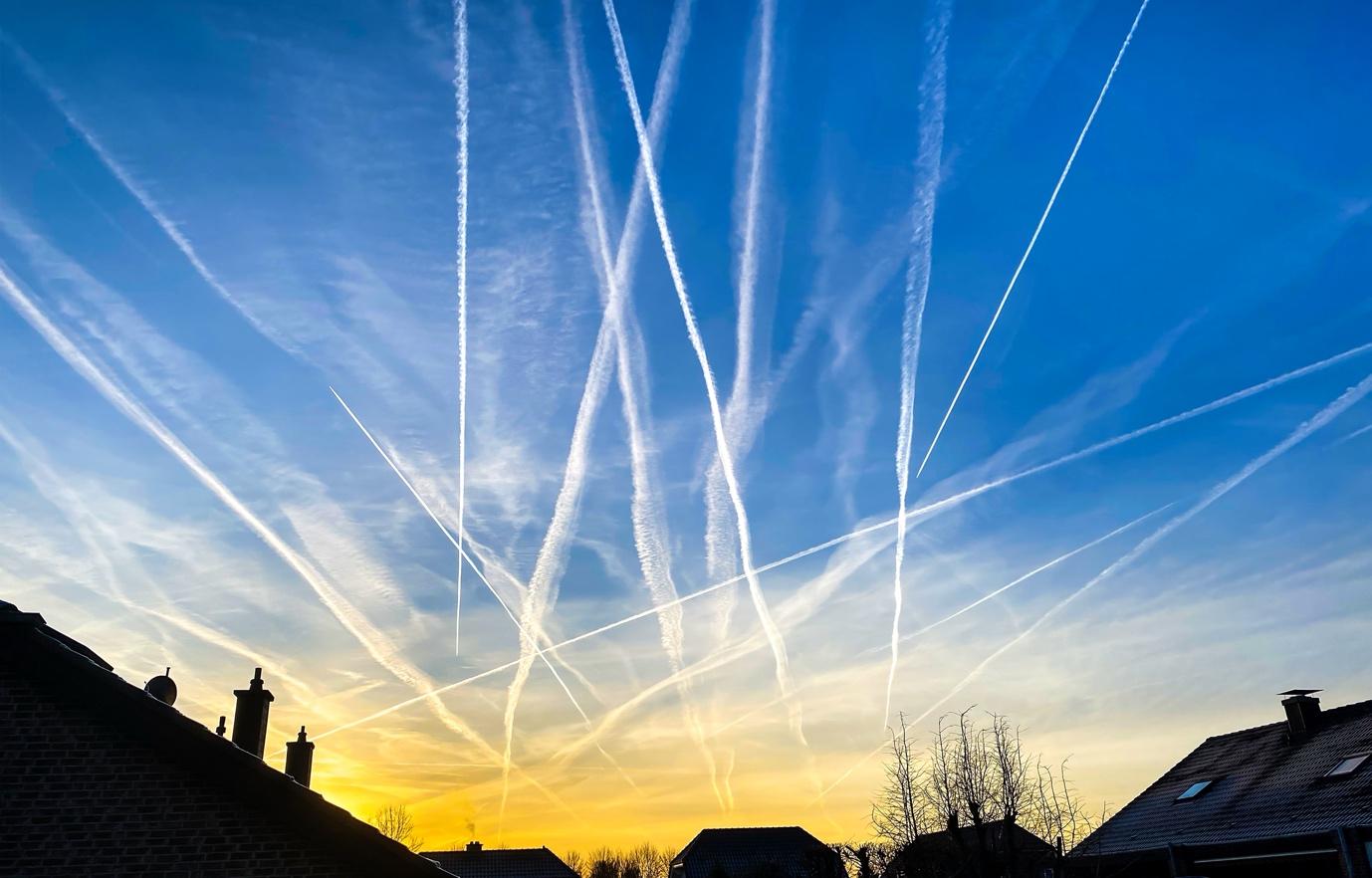
Aviation has made real progress in cutting CO₂ emissions through the gradual adoption of sustainable aviation fuel (SAF). However, a second climate challenge is now moving into focus: contrails. These thin ice-crystal clouds can persist for hours and, under the right conditions, create a warming effect that can exceed the CO₂ emissions of the flight itself.
This is why the UK’s newly announced QRITOS project, led by Rolls-Royce with British Airways, Imperial College London and Heathrow, is so important. The initiative underlines a simple idea: fuel chemistry matters. Cleaner fuels generate fewer soot particles, which means fewer ice-nucleation sites and therefore far fewer warming contrails.
Maximising climate benefit – the role of SAF
QRITOS was designed to identify the flights most likely to generate persistent contrails and then test how SAF can be deployed where it has the greatest impact. Through laboratory analysis, engine rig tests, in-flight measurements and atmospheric modelling, the consortium aims to show how “smart use” of SAF, in particular Fischer–Tropsch (FT) derived fuels, can significantly reduce the number of ice crystals formed behind aircraft.
“The project aims to show that we can prioritise particular flights for SAF, focusing on where it can deliver the greatest environmental benefit and maximise the effectiveness of the current levels of supply.” QRITOS statement
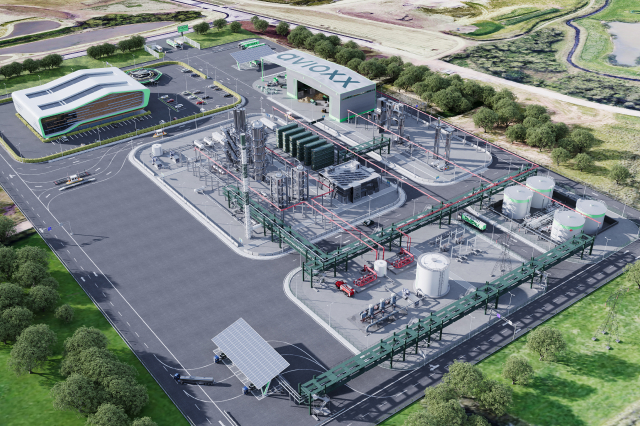
This aim closely aligns with our findings at Avioxx. Our integrated waste-to-jet process produces an ultra-clean FT kerosene with exactly the characteristics most strongly linked to reducing contrail formation.
What are contrails?
With global air travel increasing, both carbon emissions and contrail formation are rising, which means aviation’s true climate impact is two to three times larger than its CO₂ output alone.
Contrail formation depends on a specific set of conditions:
- Cold, humid air masses at high altitude, typically below −40 °C
- Aircraft and engine type
- Fuel composition, especially soot and sulphur content
- Phase of flight, with high-thrust climbs being most conducive
To address this, operators are exploring flight-path optimisation and now, precision deployment of SAF where contrails are most likely to form. This targeted approach means not every flight leaving the UK would use a 2% SAF blend, as mandated today. Instead, limited SAF supply would be directed first to the flights most likely to generate persistent contrails.
Cleaner chemistry, fewer contrails
Rolls-Royce’s recent work confirming that ultra-clean FT SAF can reduce contrail formation supports Avioxx’s decision to engineer fuel specifically for low soot and low particulate emissions. Decarbonising aviation through fuel quality is one of the most direct ways to reduce warming impacts.
The UK’s SAF mandate is accelerating this shift:
“SAF use is expected to increase in the UK… reaching 10% of jet fuel supply by 2030 and 22% by 2040.”
As awareness grows of aviation’s full climate footprint, contrail mitigation is becoming a central frontier in decarbonisation. Rolls-Royce has also highlighted that:
“Most of the potential climate impact comes from only a small proportion of flights.”
This creates a clear strategic opportunity: target those specific flights with the cleanest available fuel.
Deploying SAF where it matters most
Because SAF remains scarce, QRITOS stresses the need for precision deployment. This approach greatly increases the climate benefit per tonne of SAF, delivering a far higher return on limited supply. By allocating SAF to routes, flight levels and weather windows where contrails are most persistent, operators can materially reduce non-CO₂ climate impacts without waiting for large-scale fleet or infrastructure changes.
Beyond theory – Avioxx’s evidence-based contribution
Much of the global discussion on contrails is still theoretical. Avioxx is generating hard data to show how our SAF can reduce contrails in practice:
- 0% aromatics, confirmed by Intertek
- Zero sulphur across all FT intermediates
- 72–73% n-paraffin content with minimal impurities
- Stable FT reactor behaviour over 24+ runs, verified through conversion and yield analysis
- SIMDIS curves showing kerosene-range volatility with negligible residue
- Hydrocracked outputs that meet Jet A-1 boiling requirements while retaining ultra-low particulate precursors
These properties make Avioxx fuel a strong candidate for the contrail-reduction strategies being advanced by Rolls-Royce, British Airways and Imperial College London.
“For us, contrails are not a side issue, they are central to aviation’s true climate footprint. By controlling fuel chemistry from waste feedstock through to final kerosene cut, we can cut soot and ice-crystal formation without adding complexity for airlines. The next step is to prove this at scale in partnership with engine makers, airlines and airports.”
– Chris Hancock, CEO, Avioxx
Aviation is entering a phase where fuels are designed, not just extracted. The industry’s focus is expanding from CO₂ alone to the full spectrum of climate impacts, including contrails. QRITOS shows that fuel composition is a critical lever for reducing aviation’s warming effect.
Avioxx’s data demonstrates that precision-engineered, ultra-clean FT fuel is well placed to support this shift. Contrail mitigation will not be achieved through generic blending targets. It demands high-quality SAF that is purpose-engineered and deployed where it delivers the maximum climate benefit.
FT-derived, waste-to-jet fuel makes this possible. It is scalable, circular and economically viable. Above all, it points to the future of aviation fuel: clean, targeted and engineered for climate impact.