



Fuel shock: the world’s oil crisis exposes Britain’s energy vulnerability
By Myfanwy Fleming-Jones
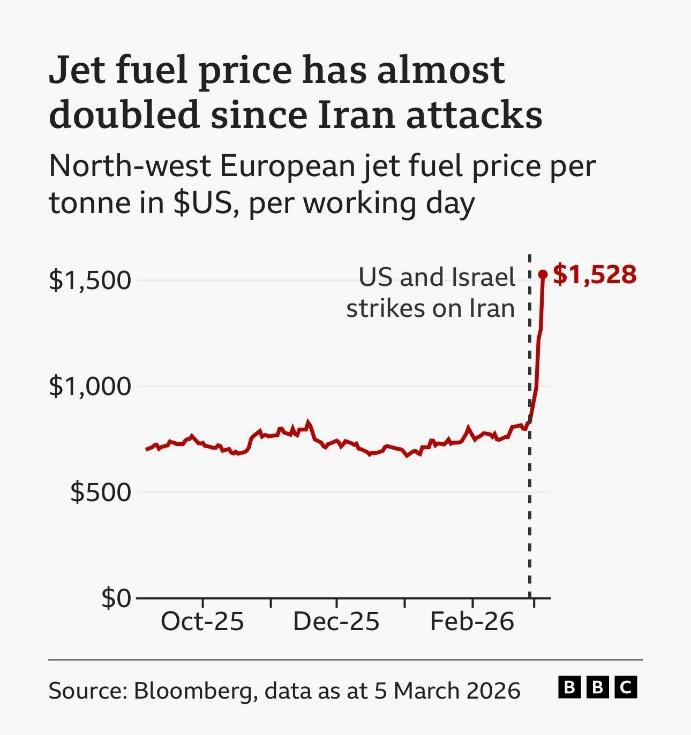
Fuel markets have been shaken by escalating tensions in the Middle East. Since late February, jet fuel prices have risen sharply following US and Israeli strikes on Iran and disruption around the Strait of Hormuz – a narrow shipping route through which roughly 20% of global oil supply passes.
Jet fuel typically represents 20–30% of an airline’s operating costs. Sudden price increases therefore move quickly through the aviation sector.
Airlines respond by cutting marginal routes, retiring older aircraft and raising ticket prices. Cheap flights become harder to find as carriers absorb higher operating costs. Because aviation fuel prices are tied closely to global oil markets and shipping routes, any threat to supply is reflected in prices almost immediately.
This episode highlights a deeper issue. Modern economies remain heavily dependent on international fuel supply chains.
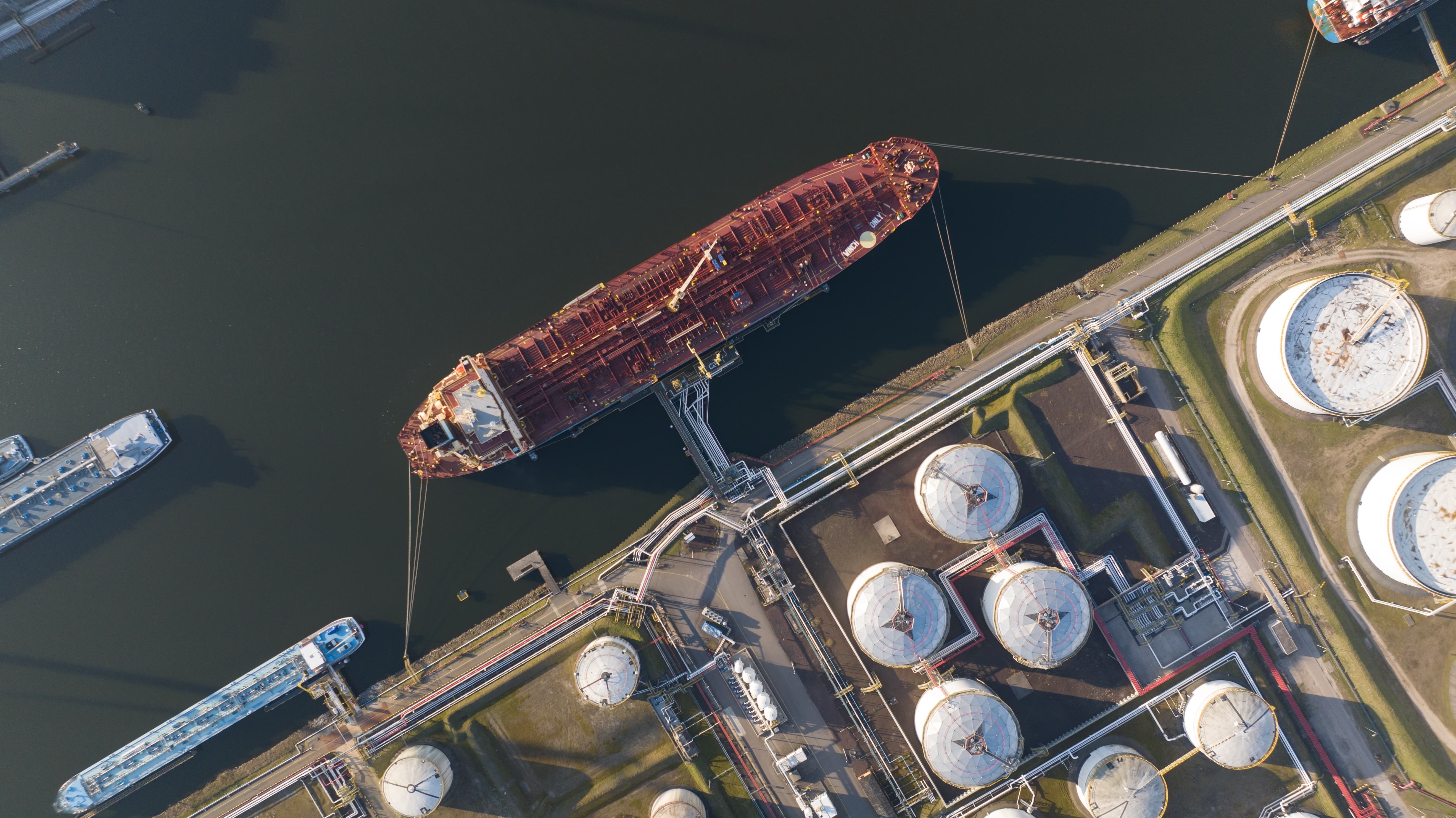
The UK imports a large share of the transport fuels it consumes, including aviation fuel used by its airlines. Much of this supply comes from European refining hubs such as the Netherlands and Belgium, as well as the United States and producers in the Gulf including Kuwait and the United Arab Emirates.
Because some of these shipments originate in the Gulf and travel through the Strait of Hormuz, instability in the region can rapidly push prices higher. This creates a structural vulnerability for sectors such as aviation, shipping and heavy transport that rely on liquid fuels.
The situation raises an important question – could the UK reduce its reliance on imported fuel by producing more of it domestically?
One emerging pathway is the conversion of residual waste into synthetic fuels. Each year the UK generates millions of tonnes of waste that cannot be economically recycled and is often exported or sent to landfill.
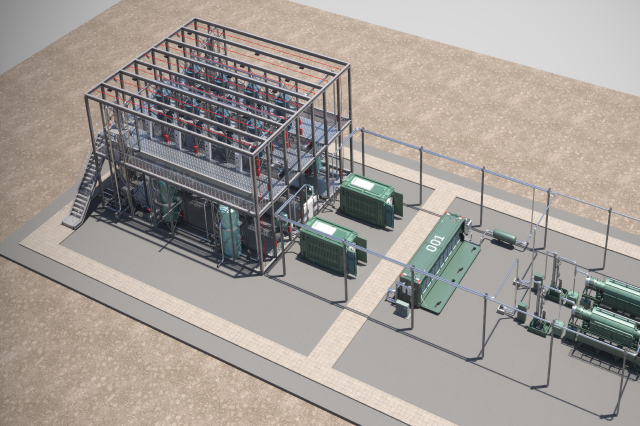
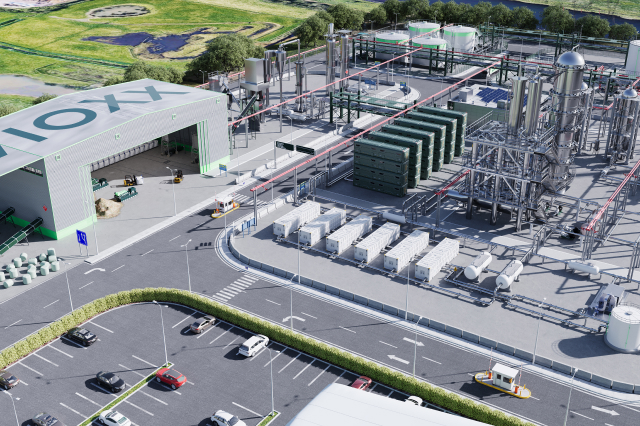
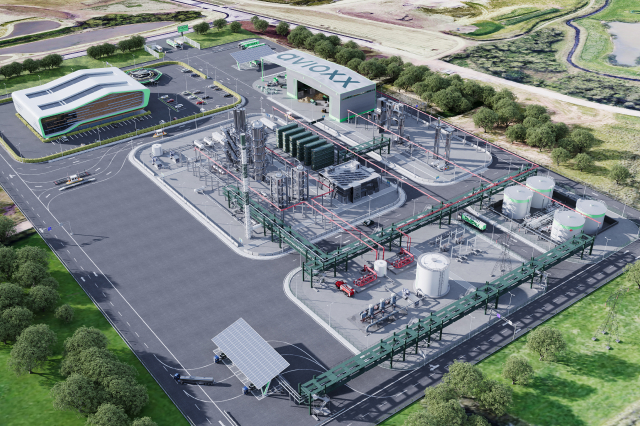
Through advanced processes such as gasification, this waste can be converted into synthesis gas and then transformed using Fischer–Tropsch chemistry into liquid hydrocarbons. These can be upgraded into diesel, gasoline and sustainable aviation fuel that are compatible with existing aircraft and fuel infrastructure.
The strategic implications are significant. Waste-to-fuel systems allow countries to produce transport fuels domestically from their own waste streams, reducing reliance on imported crude while turning an environmental liability into an industrial resource.
For aviation this is particularly important. Aircraft require high-energy liquid fuels that batteries cannot yet replace at scale. Sustainable aviation fuel produced from waste offers a practical route both to decarbonisation and improved energy security.
The recent price shock is a reminder of a simple reality. As long as transport systems rely on imported crude from geopolitically unstable regions, economies will remain exposed to events far beyond their control.
Part of the solution may lie closer to home – in the waste we already produce and the technology capable of turning it into fuel.