

Carbon markets, compliance and airline risk
By Myfanwy Fleming-Jones

In a tightening carbon regime, is not adopting SAF becoming the greater financial exposure for airlines?
The aviation industry is entering a decisive decade. As carbon markets tighten and compliance obligations expand, airlines face a growing strategic question: is continued reliance on offsets and allowances becoming riskier than investing in Sustainable Aviation Fuel (SAF)?
At the centre of this shift sits the Carbon Offsetting and Reduction Scheme for International Aviation (CORSIA), the EU Emissions Trading System (EU Emissions Trading System), and the UK Emissions Trading System (UK Emissions Trading System). For airlines operating international and intra-European routes, carbon exposure is no longer a peripheral sustainability issue. It is becoming an increasingly material component of airline operating risk.
With mandatory CORSIA compliance beginning in 2027, the window for proactive action is narrowing.
Understanding the carbon compliance landscape
We spoke with Grey Epoch, specialists in carbon markets, allowance procurement, and compliance strategy, to understand how airlines are navigating rising exposure to carbon pricing.
Carbon compliance costs under the EU ETS and UK ETS are already significant and are expected to rise over the next five to ten years. A key driver is the phase-out of free allowances. From 2024, airlines receive no free EU ETS allowances, meaning 100% of emissions must be covered by purchased permits. Carbon therefore shifts from a partial cost to a full operating expense.
EU Allowance prices have traded largely in the €70–85 per tonne range in recent years and are widely expected to trend higher over the medium term. UK ETS prices currently trade at a discount but are expected to converge as markets align. Carbon compliance is increasingly a permanent and structural cost rather than a temporary policy burden.
What carbon exposure looks like in practice
For airlines, these costs scale quickly.
A long-haul widebody flight can emit 80–100 tonnes of CO₂. At €85 per tonne, this equates to €6,800–8,500 per flight in EU ETS compliance cost alone. On short-haul networks, the cost per flight is lower, but the aggregate exposure across dense route networks remains significant.
At fleet level, the numbers are substantial. A mid-size European airline emitting 5 million tonnes of CO₂ annually faces EU ETS costs of approximately €350–425 million per year at current prices. Any increase in allowance prices feeds directly through to operating margins.
CORSIA offsets remain cheaper, typically trading at around $15 per tonne, but apply only to emissions above the baseline and do not cover domestic or intra-European exposure. They also offer limited protection against long-term price volatility or policy tightening.
How SAF changes the equation
Carbon markets price emissions after the flight. SAF reduces emissions at the source.
By lowering lifecycle emissions, SAF directly reduces the volume of emissions that must be covered under EU ETS and CORSIA. Grey Epoch highlighted that while SAF remains more expensive than fossil jet fuel today, it already plays a growing role in mitigating compliance exposure.
SAF also provides a hedge against carbon price volatility. Unlike offsets, which remain an open-ended and potentially escalating cost, SAF delivers a structural reduction in reportable emissions. When secured through long-term offtake agreements, it also provides price certainty.
Rather than replacing carbon markets, SAF and ETS compliance are expected to operate in parallel. Airlines will meet mandatory SAF blending requirements, initially at low percentages, and then scale adoption depending on the relative cost of SAF versus carbon allowances. This interaction is likely to define the next phase of aviation decarbonisation.
A simplified SAF mitigation example
Consider a European airline emitting 1 million tonnes of CO₂ annually on EU-covered routes.
At an allowance price of €85 per tonne, annual EU ETS compliance cost is approximately €85 million.
If the airline adopts a 10% SAF blend delivering a conservative 65% lifecycle emissions reduction, reportable emissions fall by around 65,000 tonnes of CO₂ per year. This reduces EU ETS exposure by roughly €5.5 million annually at today’s prices. As carbon prices rise, that saving increases proportionally.
Importantly, this reduction is recurring. SAF lowers the emissions baseline every year, whereas offsets must be repurchased indefinitely. Over time, this shifts SAF from a premium cost to a risk-mitigation tool.
Temporary cost barriers
Two constraints still shape SAF adoption today: higher prices relative to fossil jet fuel and limited global supply.
Neither is static. As mandates expand and long-term offtake agreements increase, SAF costs are expected to fall. At the same time, carbon prices are expected to rise. The economics begin to converge.
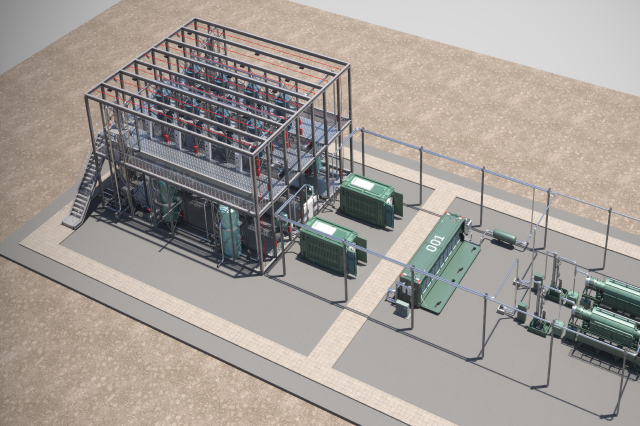
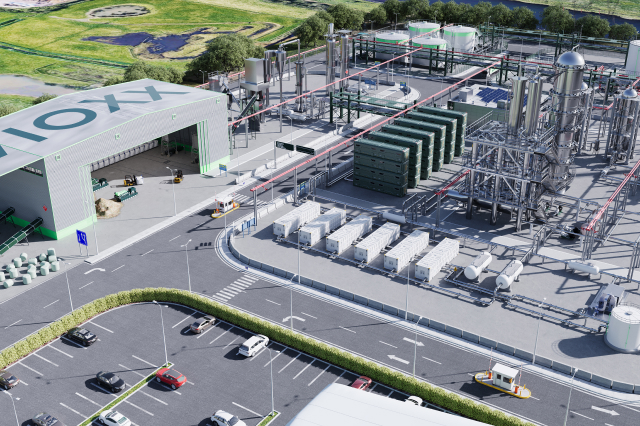
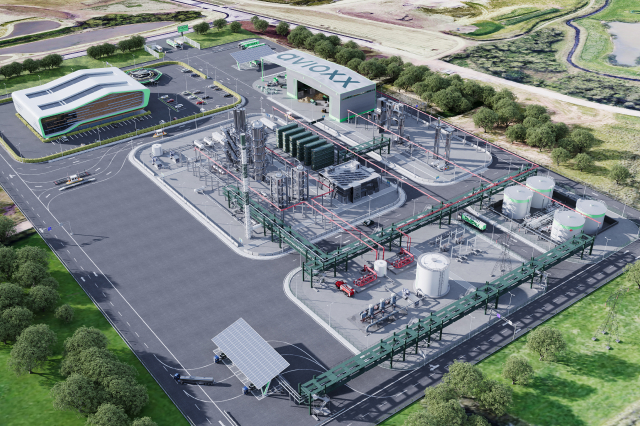
At Avioxx, this inflection point accelerates further. Our patented fuel production system operates without reliance on grid electricity, enabling SAF production that is cost-competitive with fossil jet fuel at scale. This removes one of the key structural barriers to widespread adoption.
Beyond compliance: carbon avoidance through waste diversion
SAF produced from waste-derived feedstocks delivers additional carbon benefits beyond aviation accounting.
Diverting waste from landfill or incineration avoids emissions that would otherwise occur in the waste sector. These avoided emissions are not always fully reflected in aviation compliance frameworks today, but they are increasingly recognised by policymakers as part of whole-system decarbonisation.
By converting residual waste into fuel, waste-to-SAF pathways reduce emissions at both ends of the value chain: avoiding waste-sector emissions while displacing fossil jet fuel. This strengthens the long-term policy and economic case for SAF relative to offset-based compliance.
Offsets versus real reductions: the limits of CORSIA
CORSIA allows airlines to offset emissions above a baseline set at 85% of 2019 industry emissions. By 2027, it is expected to cover nearly 85% of global international aviation emissions, including major markets such as China, Brazil and India.
Eligible CORSIA credits currently trade at around $15 per tonne, far below EU allowance prices. This price gap explains why offsets remain attractive in the near term. However, offsets do not reduce aviation’s direct emissions, and their long-term credibility and availability remain under scrutiny.
The UK government’s Carbon Budget and Growth Delivery Plan reflects this tension. While it recognises CORSIA offsets as a contributor to emissions reductions, SAF remains the primary tool for delivering real, in-sector decarbonisation.
SAF momentum is already building
Policy and industry signals increasingly support SAF deployment. The UK SAF mandate requires:
- 2% by 2025
- 10% by 2030
- 22% by 2040
Industry action is accelerating alongside regulation. Heathrow Airport has introduced a SAF incentive scheme targeting 3% SAF use in 2025, exceeding the UK mandate. This is expected to cut 500,000 tonnes of CO₂ in 2025 alone, equivalent to roughly 8,000 economy return flights between London and New York.
Lifecycle analysis shows SAF produced from sustainable feedstocks can deliver up to 70% greenhouse gas savings compared with fossil jet fuel. Beyond CO₂, SAF burns cleaner, reducing soot and contrail formation, which is increasingly recognised as a major contributor to aviation’s non-CO₂ climate impact.
The cost of not adopting SAF
Aviation decarbonisation is uniquely challenging. Reducing emissions without reducing flights requires structural change. Offsets can play a transitional role, but they cannot deliver durable emissions reduction or long-term cost stability on their own.
As carbon prices rise, free allowances disappear resulting in SAF supply scaling and the financial equation for airlines to shift. The cost of not adopting SAF is increasingly likely to exceed the premium paid to use it.
Airlines that act early, identify high-emission routes, and integrate SAF strategically will be better positioned to manage compliance exposure, investor scrutiny, and long-term operating cost.
In a tightening carbon environment, delay itself carries a price.